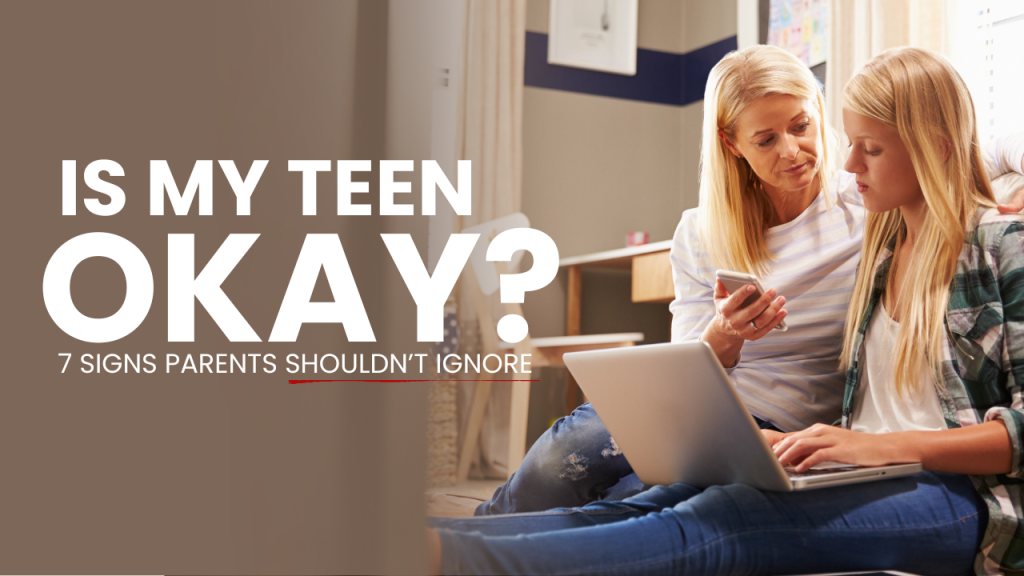
Every teenager has difficult days. Mood swings, changing friendships, emotional ups and downs, and a growing desire for independence are all part of adolescence. As parents, it can be difficult to know when those changes are simply part of growing up—and when they’re signs your teen may need more support.
If you’ve noticed ongoing changes in your teen’s mood, behavior, relationships, school performance, sleep, or eating habits that continue for several weeks or begin affecting everyday life, it’s worth paying closer attention. One difficult day usually isn’t cause for concern. A pattern of changes deserves a conversation.
According to the Centers for Disease Control and Prevention (CDC), 40% of U.S. high school students reported persistent feelings of sadness or hopelessness in 2023.
While that statistic can feel alarming, it isn’t meant to create fear. Instead, it reminds us that many teenagers are carrying burdens that aren’t always visible—and that parents who notice those struggles can make an incredible difference.
For more than 40 years, House of Hope has walked alongside teenagers and families through difficult seasons, and our team of licensed therapists and counselors has seen firsthand how early conversations can change the course of a young person’s life.
The encouraging news is this: noticing the signs doesn’t mean you’ve failed as a parent.
It means you’re paying attention.
At a Glance
Your teen may need more support if they:
- No longer seem like themselves.
- Start struggling at school.
- Withdraw from family or healthy friendships.
- Become unusually angry or rebellious.
- Experience significant changes in sleep or eating habits.
- Lose interest in activities they once enjoyed.
- Leave you with a persistent feeling that something isn’t right.
Rather than focusing on one isolated behavior, look for patterns. House of Hope’s team of licensed therapists and counselors often reminds parents that healing begins when caring adults slow down, pay attention, and respond with compassion instead of fear.
1. They Don’t Seem Like Themselves
What deserves your attention is when your teen no longer seems like the person you know. Perhaps they’ve lost interest in activities they once loved. Maybe they seem emotionally flat, unusually irritable, or simply don’t laugh the way they used to.
House of Hope’s licensed therapists and counselors often tell parents that healing begins with feeling seen. Before behavior changes, a hurting heart is often longing for someone to notice.
Rather than asking, “What’s wrong with you?” try asking, “I’ve noticed you haven’t seemed like yourself lately. How are you really doing?”
It’s a simple question, but it communicates something every teenager longs to know: I see you. You matter to me. I’m here to listen.
If you’re struggling to decide how to approach your teen, in the Bible, James reminds us, “If any of you lacks wisdom, you should ask God, who gives generously to all without finding fault” (James 1:5).
2. School Performance Suddenly Changes
When a teenager who once cared about school suddenly stops trying, begins missing assignments, or experiences a noticeable decline in grades, it’s worth asking why before assuming they’re simply being lazy or unmotivated. Stress, anxiety, friendship challenges, family conflict, or feeling overwhelmed can all affect a teen’s ability to concentrate and stay engaged.
Our counseling team often reminds parents that declining grades don’t always point to an academic problem. Sometimes they’re one of the first outward signs that a teenager is struggling emotionally.
You might ask, “Has school been feeling overwhelming lately?” or “Is there something that’s making it hard to concentrate?” Questions like these invite conversation rather than defensiveness.
3. They Pull Away From Family and Healthy Friends
Isolation is different from the normal desire for independence. If your teen begins withdrawing not only from family but also from healthy friendships, activities they once enjoyed, or the people who have always been part of their support system, it’s worth paying attention.
Over the years, House of Hope has seen how isolation can quietly deepen emotional pain. Staying connected—even through small, everyday moments—can remind a teenager they don’t have to face their struggles alone.
You don’t have to force long conversations every night to stay connected. Keep inviting them to dinner. Ask if they’d like to take a walk. Sit beside them while they watch television, even if very little is said.
Psalm 34:18 reminds us that “The Lord is close to the brokenhearted and saves those who are crushed in spirit.”
4. Anger Becomes Their Default Response
Many teenagers haven’t yet learned how to express disappointment, fear, shame, loneliness, or anxiety. Those emotions don’t simply disappear—they often come out sideways.
Instead of asking only, “How do I stop this behavior?” consider asking a different question: “What might my teen be trying to communicate that they don’t yet have the words to say?”
House of Hope’s licensed therapists and counselors often remind parents that behavior is communication. Anger is sometimes the emotion we see, while fear, shame, loneliness, or hurt remain hidden underneath.
Healthy boundaries are an important part of loving our children well. But discipline is most effective when it’s paired with understanding.
5. Sleep or Eating Habits Change
What deserves a closer look is a significant change—sleeping far more than usual but still seeming exhausted, or barely sleeping at all; skipping meals or suddenly eating much more than they used to.
“I’ve noticed you’ve seemed really tired lately. How have you been feeling?” A gentle question often opens the door to a deeper conversation.
6. They Lose Interest in the Things They Once Loved
When your teenager consistently loses interest in the people, places, and activities that once brought them joy, it’s worth slowing down and asking why. Don’t begin with assumptions. Begin with curiosity: “I’ve noticed you haven’t wanted to do some of the things you used to enjoy. I’ve been wondering how you’re doing.”
Our team has found that when parents respond with curiosity instead of criticism, teens are often more willing to open up about what’s really going on.
7. Their Words Leave You Concerned
You might hear comments like: “Nothing matters anymore.” “Nobody would miss me.” “I’m just so tired.” “I’ll never be good enough.”
Rather than assuming they’re “just being dramatic,” consider those moments an invitation to lean in with compassion: “Can you tell me more about what you mean?”
If your teen talks about feeling hopeless, expresses thoughts of self-harm or suicide, or says they don’t want to live, take those words seriously. Stay with them, listen without judgment, and seek immediate support. If you believe your teen is in immediate danger, call 911 or go to the nearest emergency department.
If you’re in the United States or Canada, you can also contact or text 988 to reach the Suicide & Crisis Lifeline for immediate guidance and support. If you’re in another country, contact your local emergency services or crisis hotline.
Asking for help isn’t overreacting—it’s one of the most loving things you can do.
Look for Patterns, Not Just One Sign
No single behavior tells the whole story. At House of Hope, we encourage parents to look for patterns rather than isolated moments. You know your child better than anyone else. If something has been quietly telling you that your teen doesn’t seem like themselves, don’t ignore that feeling.
One of the most loving things you can say is, “I may be wrong, but I love you too much not to ask how you’re really doing.”
What Should You Do Next?
Not every struggling teen is in crisis. But every struggling teen deserves someone who notices, listens, and responds with love.
Begin with a conversation. Choose a quiet moment when neither of you feels rushed. Ask open-ended questions, listen more than you speak, and resist the urge to solve everything in one sitting.
If the patterns continue after that conversation—or if your teen isn’t able to open up, even with your best effort—that’s a sign it may be time to bring in additional support.
A licensed therapist or counselor can help your teen process what they’re carrying in a way that a parent, however loving, sometimes can’t reach alone. Reaching out for professional support isn’t a last resort. It’s often the most effective next step, and earlier is always better than later.
Healing Begins in the Heart
Behavior is often the outward expression of something much deeper. We don’t begin by asking, “How do we stop this behavior?” We begin by asking, “What does this young person need in order to experience healing?”
Hope Changes Everything
For more than 40 years, House of Hope has walked alongside teenagers and families facing circumstances they never imagined. Healing doesn’t usually happen overnight. More often, it begins with one honest conversation, one act of forgiveness, one prayer, or one courageous step toward getting help.
No teenager is ever too far gone. No family is beyond God’s reach.
Through Christ, healing and restoration are always possible.
Frequently Asked Questions
How do I know if my teen needs help? Look for ongoing patterns rather than isolated incidents. If changes continue for several weeks and begin affecting everyday life, it’s time to lean in with curiosity, compassion, and conversation.
What’s the difference between normal teenage behavior and signs my teen may need help?
Every teenager has difficult days. What matters most is whether you’re seeing a pattern over time. If changes in mood, behavior, relationships, school, or daily functioning continue for several weeks or begin affecting multiple areas of your teen’s life, it’s worth starting a conversation and seeking support if needed.
Is it normal for teens to stay in their room? Yes. Wanting more privacy is a normal part of adolescence. However, if your teen consistently withdraws from family, healthy friendships, and activities they once enjoyed, it’s worth beginning a conversation.
When should I seek professional help? If your teen talks about self-harm or suicide, expresses hopelessness, or you’re concerned for their immediate safety, seek professional help immediately. But you don’t have to wait for a crisis to reach out. If you’re noticing several of the patterns above over a period of weeks—even without an urgent red flag—that’s reason enough to connect with a licensed therapist or counselor. Early support often prevents a difficult season from becoming a crisis.
What if my teen refuses to talk? Don’t give up. Continue showing up with patience, consistency, and love.
Looking for More Guidance?
This article is a starting point.
For a deeper look at each warning sign, conversation starters, practical next steps, and encouragement from House of Hope’s licensed therapists and counselors, download our free guide: